

The Long-Tail Problem: Where Relational Databases Start to Creak
Why Relational Databases Struggle with Long-Tail Data?
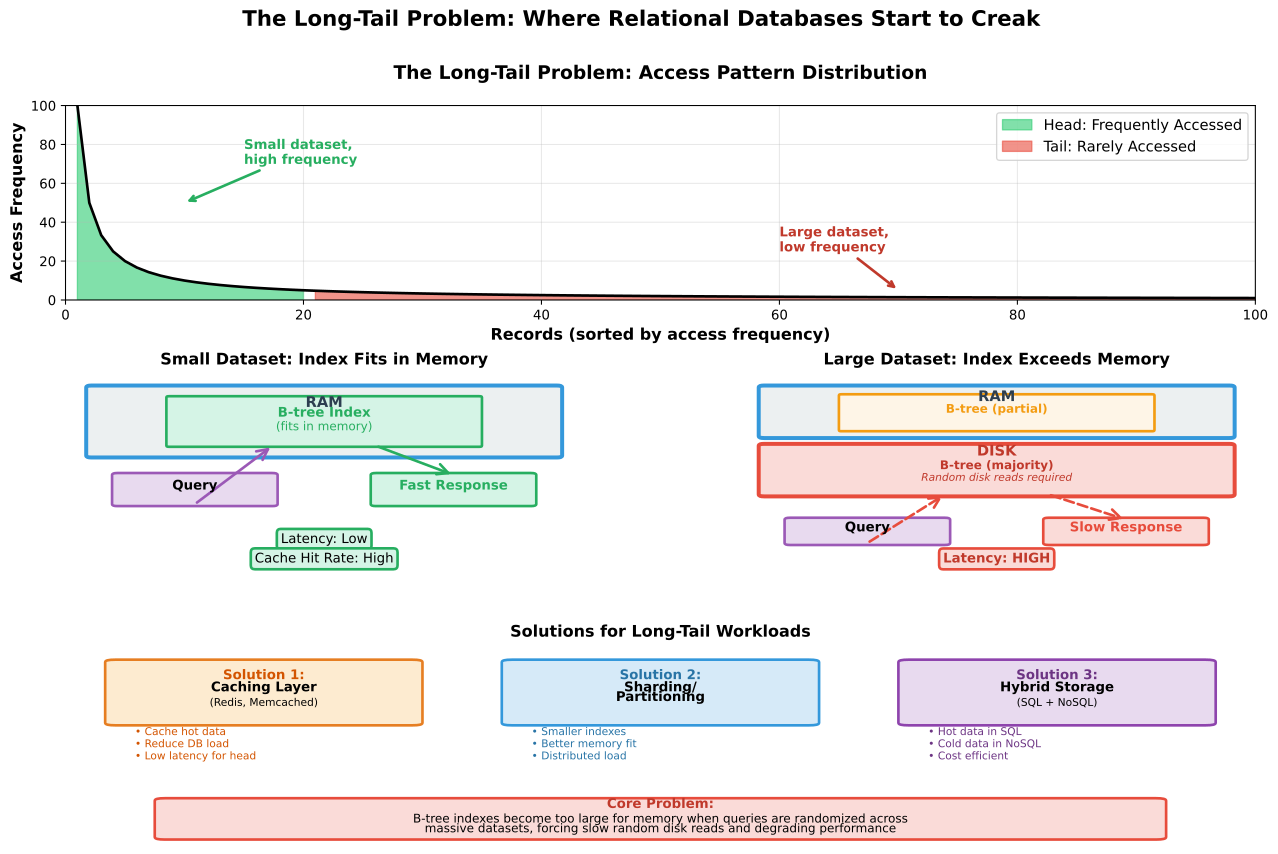
Most systems have a few popular records that get accessed all the time — and millions of others that are rarely touched. This pattern is called the long tail.
Popularity
│\
│ |
│ |
│ |____________________
│
└───────────────────────────────▶
Head (popular)          Tail (rare)
Relational databases (like MySQL or PostgreSQL) use B-tree indexes to find rows quickly.
They work great when most queries hit the same small set of data — the “head.”
But when the dataset grows huge and queries become random, indexes get so large that they no longer fit in memory.
Once that happens, each query must perform random disk reads, which are slow.
The result: latency increases, caches miss more often, and performance drops sharply.
Query Speed (Y-axis)
│\
│ \
│  \_
│    \_________
│
└────────────────▶
     Data Size (X-Axis)
In short, relational databases don’t handle the long tail well because their index lookups become too random and too expensive at scale.
To handle long-tail workloads better:
- Use a caching layer (e.g., Redis) for hot data.
- Shard or partition data to keep indexes smaller.
- Move cold data to NoSQL or cheaper storage.
Takeaway:
Relational databases shine for structured, frequently accessed data —
but stumble when every query explores a new corner of the dataset.
Inspiration
#Databases #System Design #Relational Databases #Long Tail Data #Database Indexing #Performance Optimization #Scalability #Data Architecture #Cache Efficiency #NoSQL vs SQL #Data Access Patterns #Query Performance #Index Tuning #Storage Systems #Backend Engineering